The AI Organization Architect: Do We Still Need Traditional Software Teams?
What if the future of software development isn't about adding AI to existing teams, but fundamentally rethinking how we organize the work?
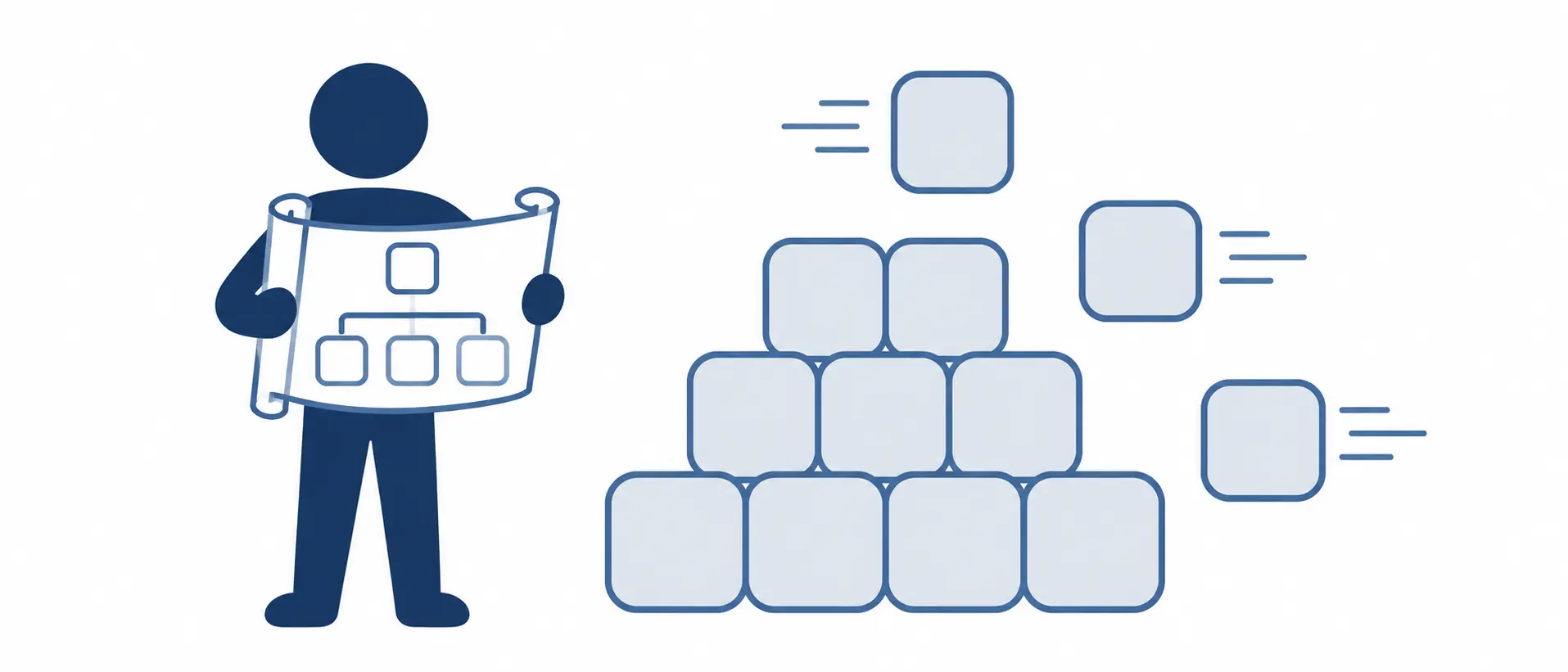
For decades, we've organized software development around specialized roles. Product Owners define what needs to be built, developers write code, QA engineers verify quality, architects design technical solutions, and Scrum Masters or managers help coordinate the work. Agile approaches have challenged some of these boundaries by encouraging cross-functional collaboration and collective responsibility, but specialization remains central to how most organizations operate.
And that makes sense. Building software requires multiple forms of expertise, and traditionally, that expertise has been carried by people. We organize people into teams because no single individual can reasonably master every discipline required to create a complex product.
But something fundamental is changing. AI agents are becoming increasingly capable of performing activities that previously required specialized human expertise. Development, testing, documentation, architectural analysis, and even parts of product discovery can now be supported or partially executed by autonomous systems.
So here's the question I've been exploring: what happens when we no longer need a different human specialist for every activity involved in building a product?
I believe we might be approaching a fundamental transformation in how software is developed. Not simply because existing teams will become more productive, but because AI could enable an entirely different way of organizing work.
From assembling teams to designing systems
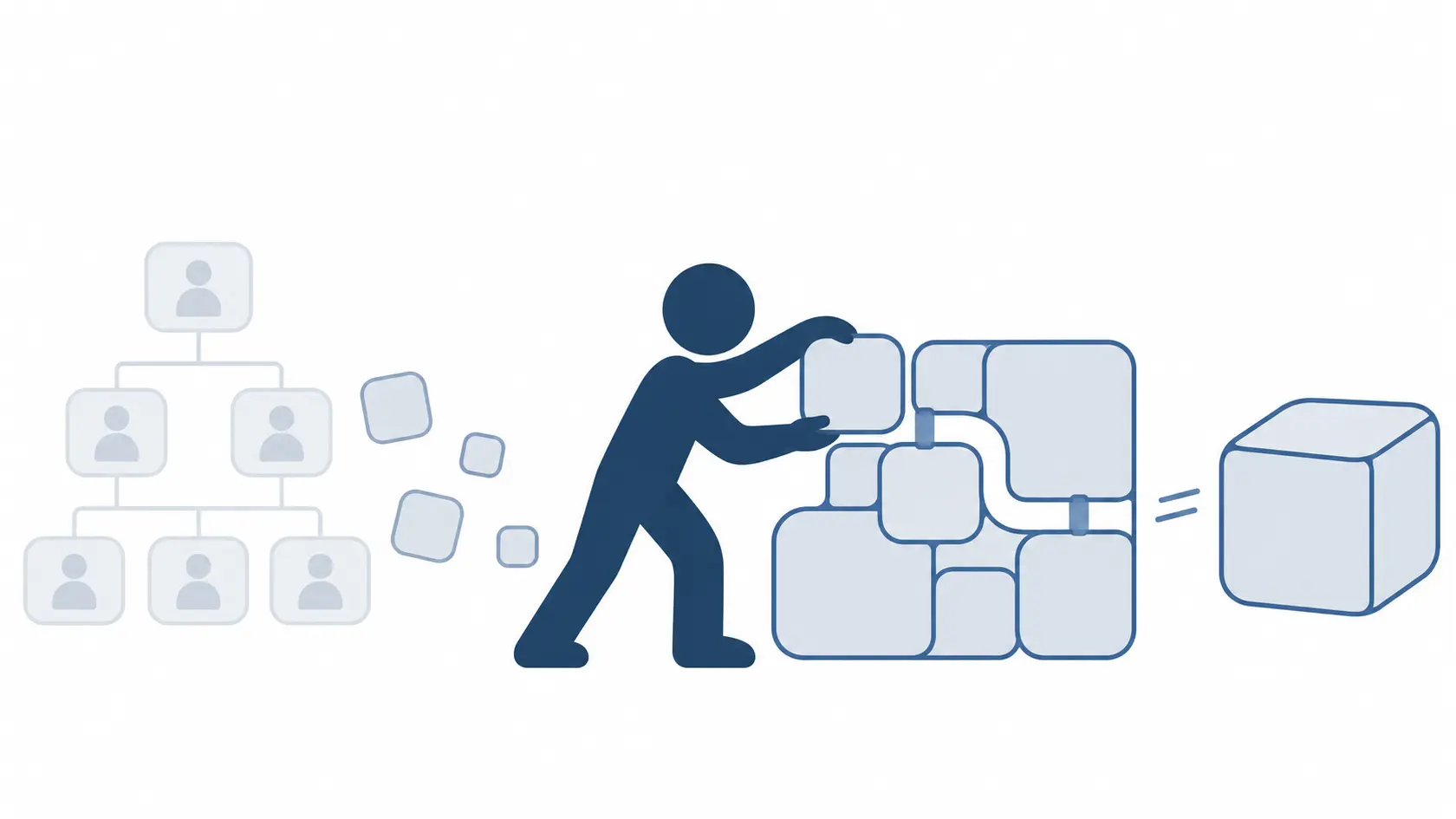
Let's imagine someone responsible for creating a new software product. Traditionally, they would need to assemble or collaborate with a team of developers, designers, testers, architects, and potentially other specialists. Each person contributes their expertise to transform a business need into a working product.
Now imagine that many of these activities can be performed by AI agents. Instead of assembling a traditional development team, this person could design a system capable of delivering the product. They would identify the activities required, establish how they interact, define what information each activity needs, and determine how the results should be validated.
An agent might handle development, another testing, another security analysis, and another documentation. Other agents could coordinate activities, challenge decisions, or identify inconsistencies. The number of agents, their responsibilities, and their interactions would depend entirely on what the system needs to accomplish.
The fundamental change isn't that AI replaces individual specialists one by one. It's that we shift from organizing people around specialized activities to designing systems around the outcomes we want to achieve.
This introduces a different kind of responsibility. Instead of primarily managing the execution of work, someone must understand the objective well enough to design the organization capable of achieving it. They aren't necessarily the person writing code, performing tests, or producing documentation. They are the person defining how all those capabilities work together.
For now, I'm calling this role the AI Organization Architect.
The name isn't perfect, and parts of the role already exist in product management, systems architecture, and organizational design. But I think it captures something important: this person designs an organization of capabilities, potentially composed almost entirely of AI agents, around a specific business objective.
And because the organization is largely software-based, it can potentially be redesigned, expanded, or adapted much more easily than a traditional human team.
The missing half: product ownership
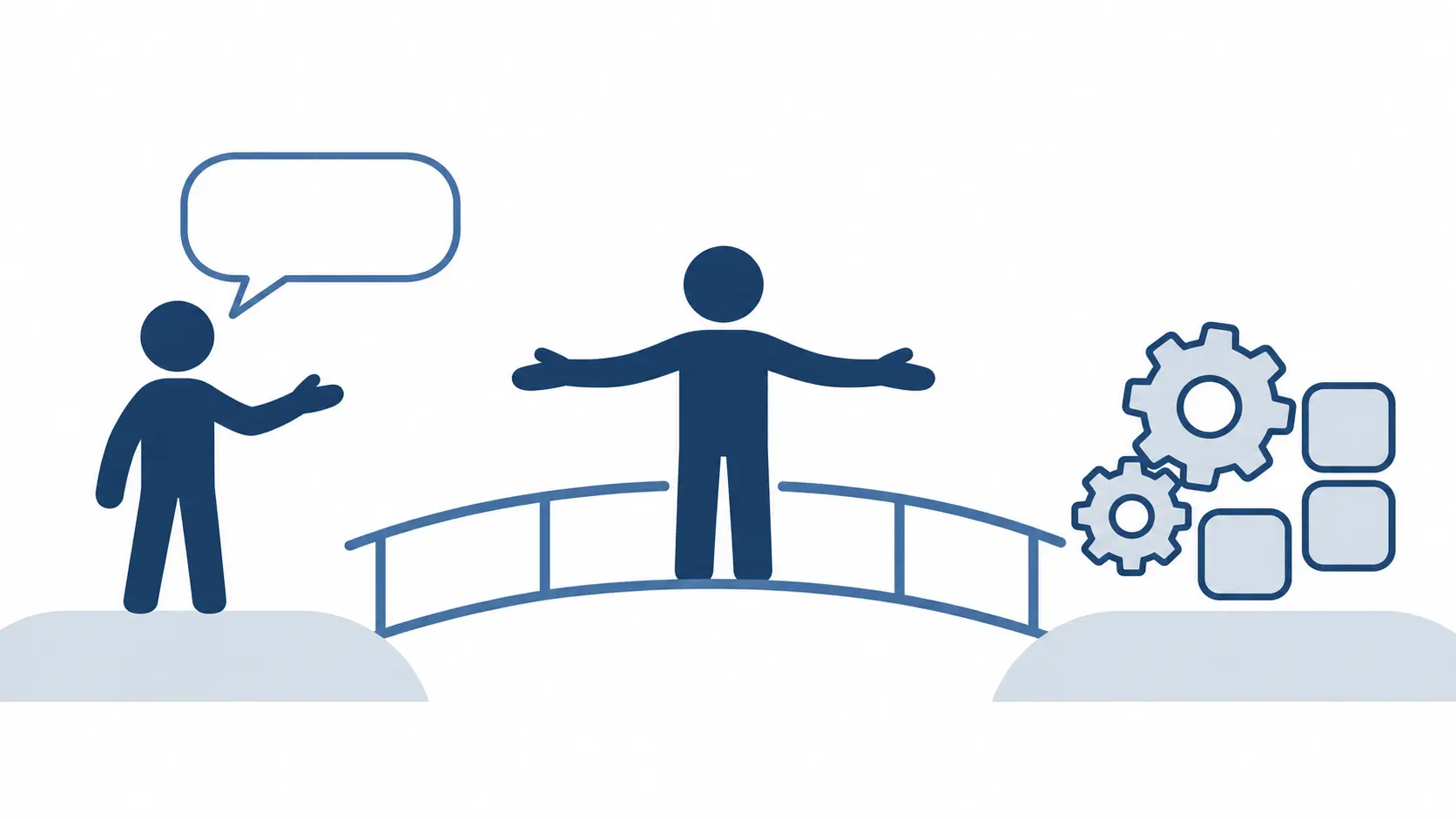
There's an important distinction here. The AI Organization Architect isn't simply a technical expert capable of connecting AI agents together. If that were the case, we would essentially be describing a new type of software architect or automation engineer.
The role I have in mind is broader because it includes something fundamental: product ownership.
In Agile, we've spent years explaining that the objective of a development team isn't to produce code. It's to create a product that solves a real problem and delivers value. Developers aren't supposed to focus exclusively on technology, just as Product Owners shouldn't become simple requirement distributors. Everyone should understand what they're trying to accomplish and why.
I believe this principle becomes even more important with AI. If agents can increasingly take responsibility for specialized execution, the human's main contribution shifts toward understanding the need, defining meaningful objectives, and ensuring that the resulting product actually delivers value.
Our AI Organization Architect therefore needs to interact directly with customers, users, and stakeholders. They must understand problems, challenge assumptions, explore alternatives, identify constraints, and establish what success means. They aren't merely collecting requirements and translating them into instructions for AI agents. They are actively participating in defining the product itself.
Consider a customer asking for a new application to manage appointments. The obvious response would be to design a system that builds the requested application. But perhaps the actual problem is reducing missed appointments, and a simpler service or an improvement to an existing system would deliver more value. The architect must be capable of identifying that distinction before mobilizing an autonomous workforce to solve the wrong problem.
In other words, the AI Organization Architect combines two responsibilities traditionally distributed across different people: understanding what should be built and designing the system that will build it.
This is probably the most disruptive part of my hypothesis. I'm not simply suggesting that developers should learn to orchestrate AI agents or that Product Owners should become better at writing prompts. I'm suggesting that these responsibilities could increasingly converge into a single role.
Designing the right organization for the objective
One consequence of this approach is that there is no predefined ideal structure. Today, companies often begin with an organizational model and adapt their work to fit it. We create Scrum teams, establish roles, assign responsibilities, and then distribute activities across that structure.
With autonomous AI agents, we have an opportunity to reverse that logic. We can start with the objective and design the organization around it.
A relatively simple service might require only a few agents operating through a straightforward workflow. A more complex product might require several specialized capabilities, parallel activities, independent reviews, and sophisticated coordination mechanisms. The organization should reflect the actual complexity of the problem rather than a standardized team composition.
The same reasoning applies to adaptability. If an organization handles a different project every day, it might benefit from AI systems capable of dynamically creating or reorganizing specialized agents. If it supports the same product over several years, a relatively stable architecture might be simpler, cheaper, and more reliable. Between these extremes, there are countless possibilities.
The architect's responsibility is to make these choices based on the context, not on technological fashion. More agents don't necessarily mean better results, and greater autonomy isn't automatically desirable.
Of course, this raises important questions about reliability, validation, escalation, and control. An autonomous organization must be designed to detect problems, manage uncertainty, and operate within appropriate boundaries. I've explored this topic in more detail in my previous article, The Biggest Obstacle to Autonomous AI Might Be Our Need for Control, particularly the importance of deterministic processes, quality gates, and observable workflows.
The principle remains the same: the architect shouldn't need to supervise every action performed by the agents. They should design a system capable of delivering reliably, with human intervention where it is genuinely necessary.
The objective isn't to create the most autonomous AI workforce possible. It's to create the organization best suited to delivering the expected outcome.
Does this really need to be one person?
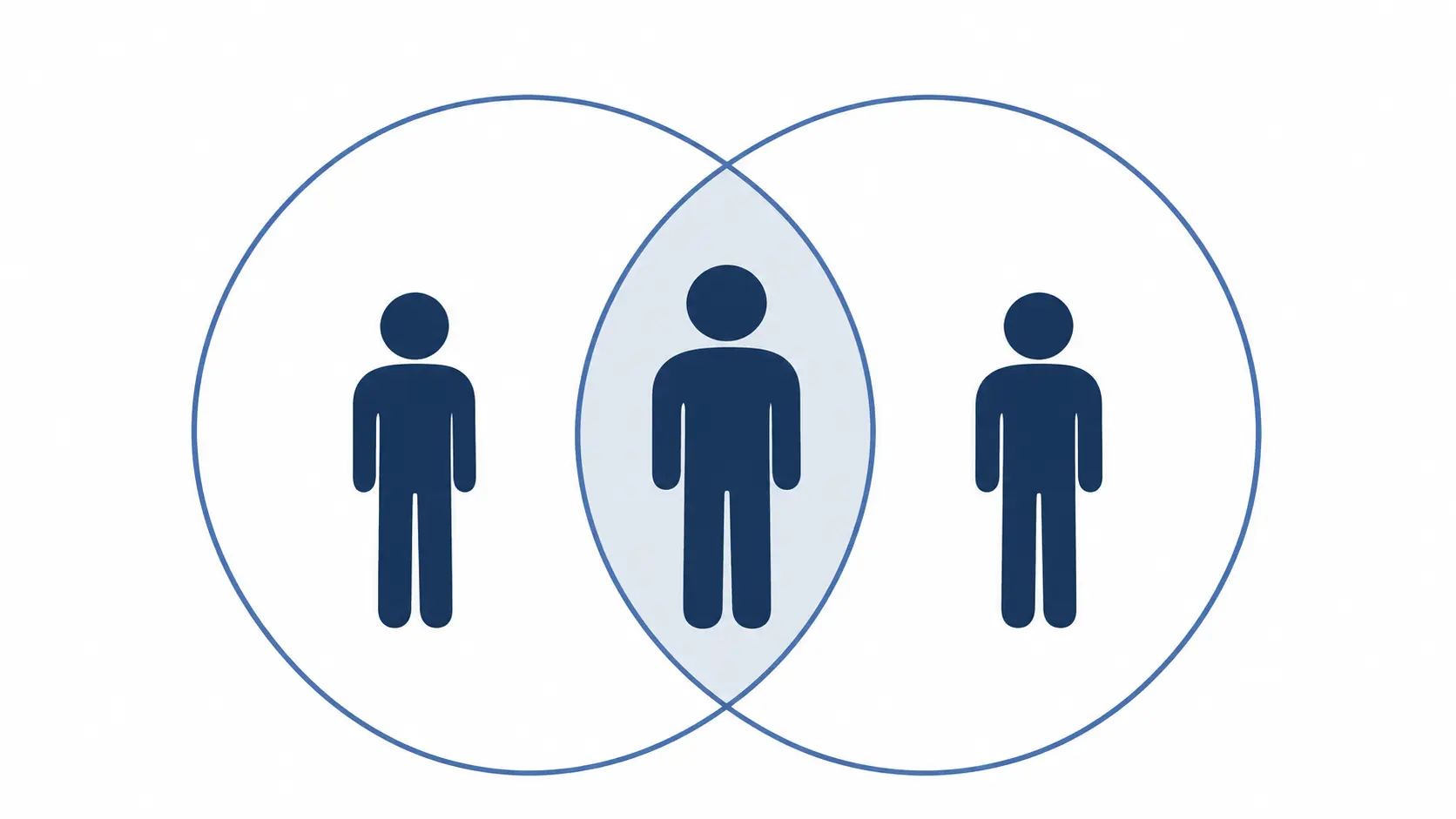
This is where my initial hypothesis becomes more controversial.
When I first started thinking about this role, I imagined a single person capable of taking a product from an initial customer need to a working service, supported by an autonomous AI workforce. That person would combine product thinking, system design, orchestration, and continuous improvement.
But is it reasonable to expect one person to master all these responsibilities?
A strong Product Manager isn't necessarily a strong systems architect. Someone who understands customers exceptionally well might have little experience designing reliable AI workflows. Conversely, an excellent AI engineer might struggle with product discovery, market understanding, or stakeholder management.
These are legitimate limitations, and we shouldn't ignore them simply because technology makes a different organizational model imaginable.
In the near term, I expect these responsibilities will often remain distributed across several people. Product specialists might collaborate with AI organization specialists, each contributing their expertise while learning from the other. Existing developers, architects, and business analysts could progressively acquire complementary capabilities.
But I don't think this necessarily invalidates the longer-term hypothesis. The technical knowledge required to operate complex systems has continuously evolved. Today, people can create applications without understanding the operating system, network protocols, or hardware architecture beneath them. Abstraction has made sophisticated technologies accessible to progressively broader audiences.
AI could accelerate this evolution significantly. As orchestration tools improve and reliable agent systems become easier to design, people with strong product expertise might be able to create increasingly complex products without personally mastering every technical discipline involved.
I don't believe we're universally there today. Current systems still have meaningful limitations, and designing a reliable autonomous workflow requires considerable experience. But I've already experimented with sufficiently autonomous development systems to believe this direction is worth exploring seriously.
Perhaps the AI Organization Architect will initially be a specialized role requiring a rare combination of product and technical skills. Over time, however, its technical component could become more accessible, allowing product-oriented people to operate increasingly sophisticated autonomous organizations.
And that's why I initially imagined one person rather than two.
Not because product management and system architecture are identical disciplines, but because AI might progressively reduce the expertise required to connect them.
What happens to traditional software teams?
If this hypothesis proves correct, the consequences for traditional development teams could be significant.
Today, we organize software development around the need to coordinate specialized human expertise. If one person can increasingly access those capabilities through AI agents, some of the reasons behind our existing structures become less compelling.
That doesn't mean companies should immediately replace their teams with individual AI orchestrators. Such a transition would be risky, both technically and organizationally. Existing teams possess valuable knowledge, relationships, and experience that cannot simply be recreated by deploying autonomous agents.
I would strongly favor a progressive approach. Give someone the autonomy to experiment with this new model on a limited scope. Allow them to design their own AI-powered delivery system, measure its effectiveness, identify its limitations, and improve it through experience. Then expand what works, adapting the organization according to the results rather than imposing a predefined transformation.
This is also why I don't believe every organization should adopt the same model or move at the same speed. Some environments will require more human specialists, particularly where consequences of failure are significant or expertise cannot yet be reliably automated. Others may be able to operate with much smaller delivery structures.
The interesting question isn't how many people AI can replace. It's how we should reorganize responsibilities when the relationship between human expertise and execution fundamentally changes.
And this opens another discussion that I think deserves its own article: if individuals become dramatically more autonomous, what happens to the collective intelligence, relationships, and shared knowledge that make companies valuable?
My intuition is that these human connections will remain essential, even if traditional fixed teams become less necessary. But preserving the value of the collective doesn't necessarily mean preserving today's organizational structures.
A new profession, or the evolution of existing ones?
Perhaps the AI Organization Architect will eventually become a recognized profession. Perhaps existing Product Owners, Product Managers, developers, and architects will progressively absorb these capabilities until the distinction disappears.
I don't know, and I don't think we need to settle that question today.
What matters to me is recognizing that AI could change not only how we perform work, but also how we define the responsibilities of the people doing it.
For decades, we've optimized software delivery around specialized human expertise. We've developed methodologies, management structures, and collaboration frameworks to help those specialists work effectively together.
AI introduces a different possibility: rather than organizing specialists to execute the work, we can increasingly design systems that provide the capabilities needed to achieve an objective.
In that world, understanding customers, defining value, designing effective systems, and continuously improving outcomes could become more central than the ability to execute any particular technical activity.
I don't expect this transformation to happen overnight, and I certainly don't believe every human responsibility can or should be automated. But I do believe the boundaries between product management, technical architecture, and delivery management are likely to evolve substantially.
Maybe the AI Organization Architect is simply a transitional role. Maybe, eventually, designing and operating an autonomous organization will become something almost anyone can do, just as using a computer is today.
That's a possibility for the future.
For now, the question I'd like to leave open is much more immediate:
If AI agents can increasingly perform the specialized activities required to build software, should we continue organizing development around traditional roles, or should we start designing organizations around people who can transform customer needs into valuable outcomes?
I think it's time to seriously explore the second possibility.
How this article was created: the ideas are mine, the words are ChatGPT's.
← Back to home